Fabric / Case study 02
AI Order Cloud
Designing AI around the work—not the novelty.
The challenge
Fabric wanted AI to become a meaningful part of its commerce platform. The easy answer was a chatbot. The harder, more valuable question was where AI could remove real operational friction without asking users to trust a black box.
Context
Why it mattered.
Merchandising and fulfillment teams work across dense systems, high-volume catalogs, and time-sensitive decisions. AI could accelerate that work, but only if it was contextual, explainable, and integrated into workflows people already understood.
My role
Where I led.
I led the design direction and helped move the initiative from an executive ambition to a shared product strategy. I facilitated alignment with executives and functional leaders, organized the design team around common principles, and partnered with product and engineering through concept development, testing, and systemization.
The approach
Turn alignment into action.
- 01
Align before designing
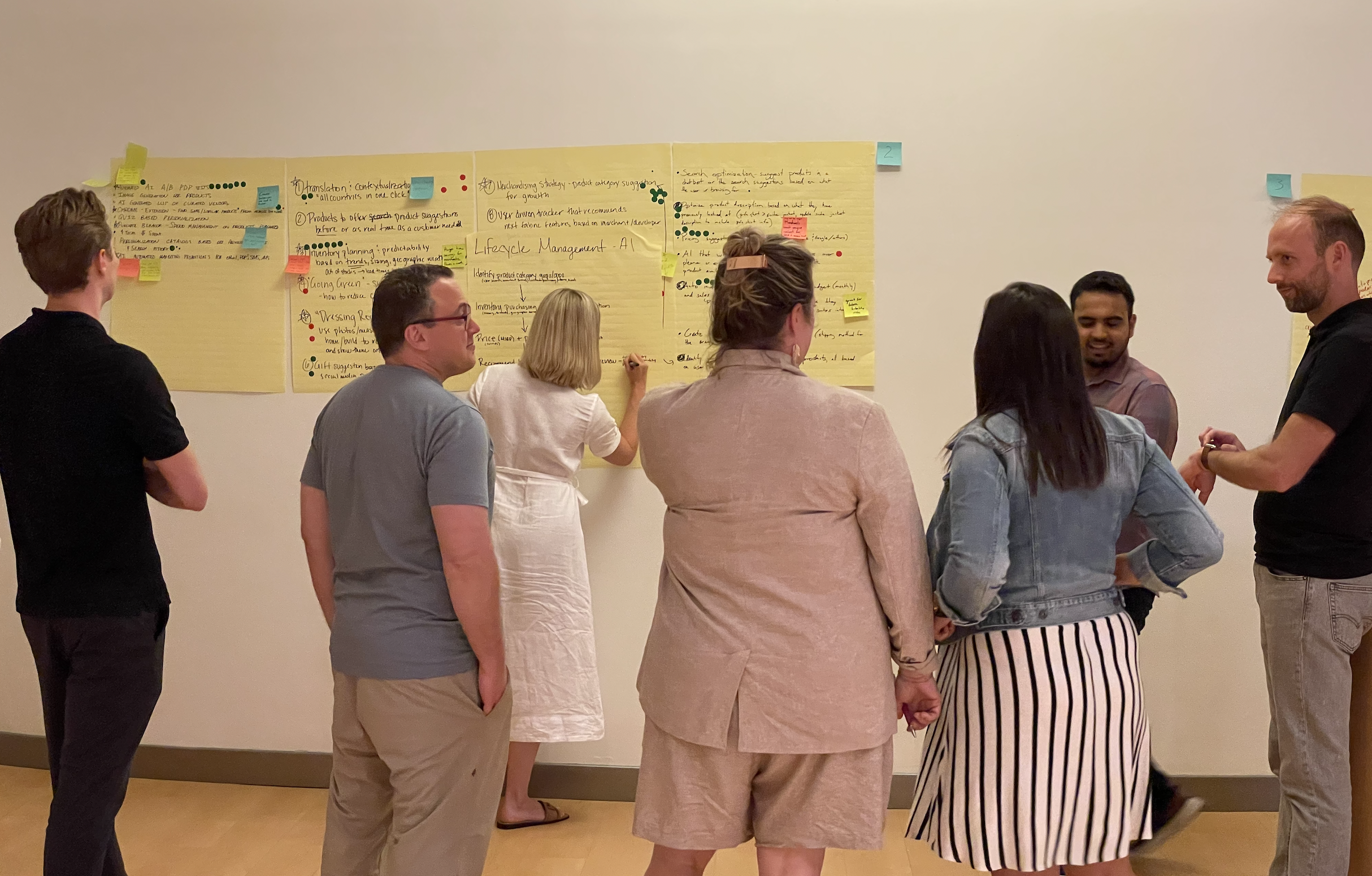
I brought executives, department leaders, and key stakeholders together to identify where AI could create credible customer and business value. The workshop gave design a strategic role early enough to influence the premise, not just the interface.
- 02
Start with consequential work
Customer conversations narrowed our focus to merchandising and supply-chain leaders. Both groups spent significant time gathering data, maintaining accuracy, and moving between systems to make decisions.
- 03
Prototype the relationship
The team explored how users would move between conversation and action, inspect the rationale behind a recommendation, and recognize AI-generated content without losing their place or sense of control.
Key decisions
The principles that shaped the work.
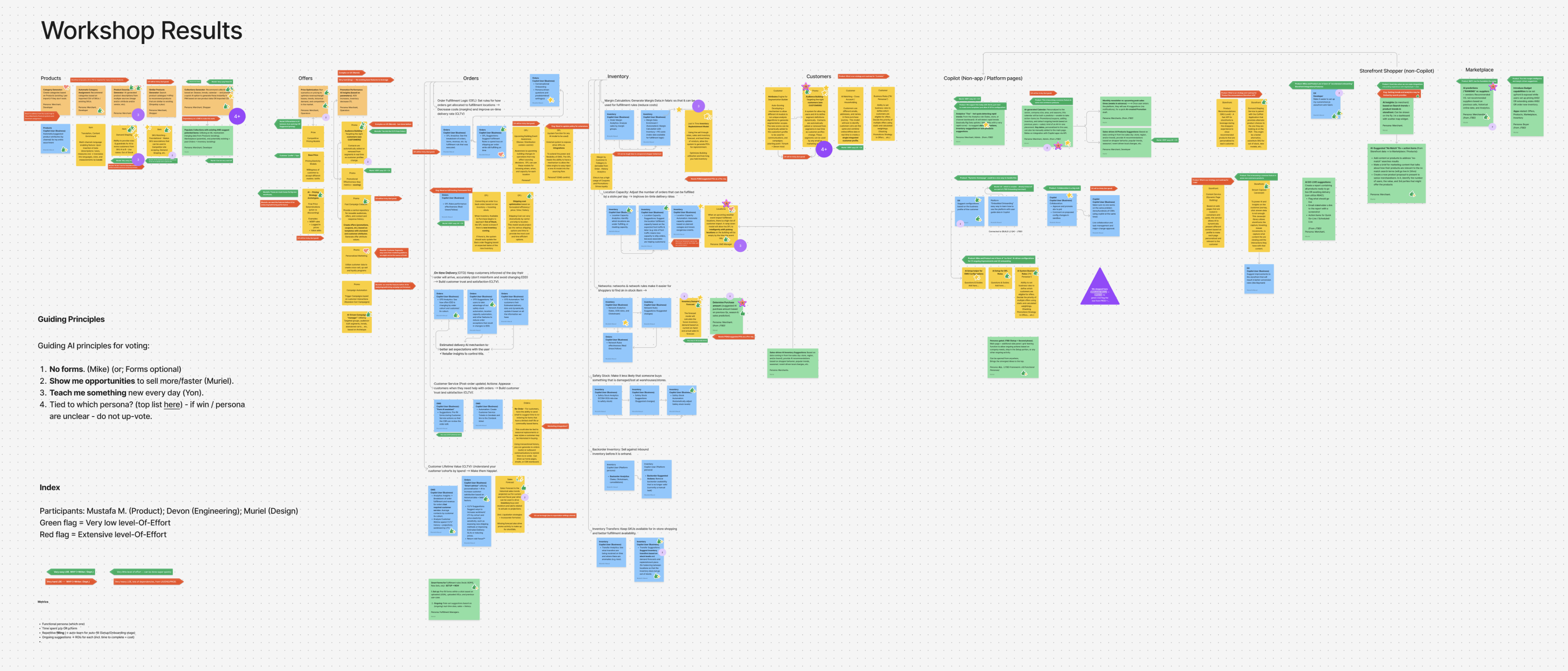
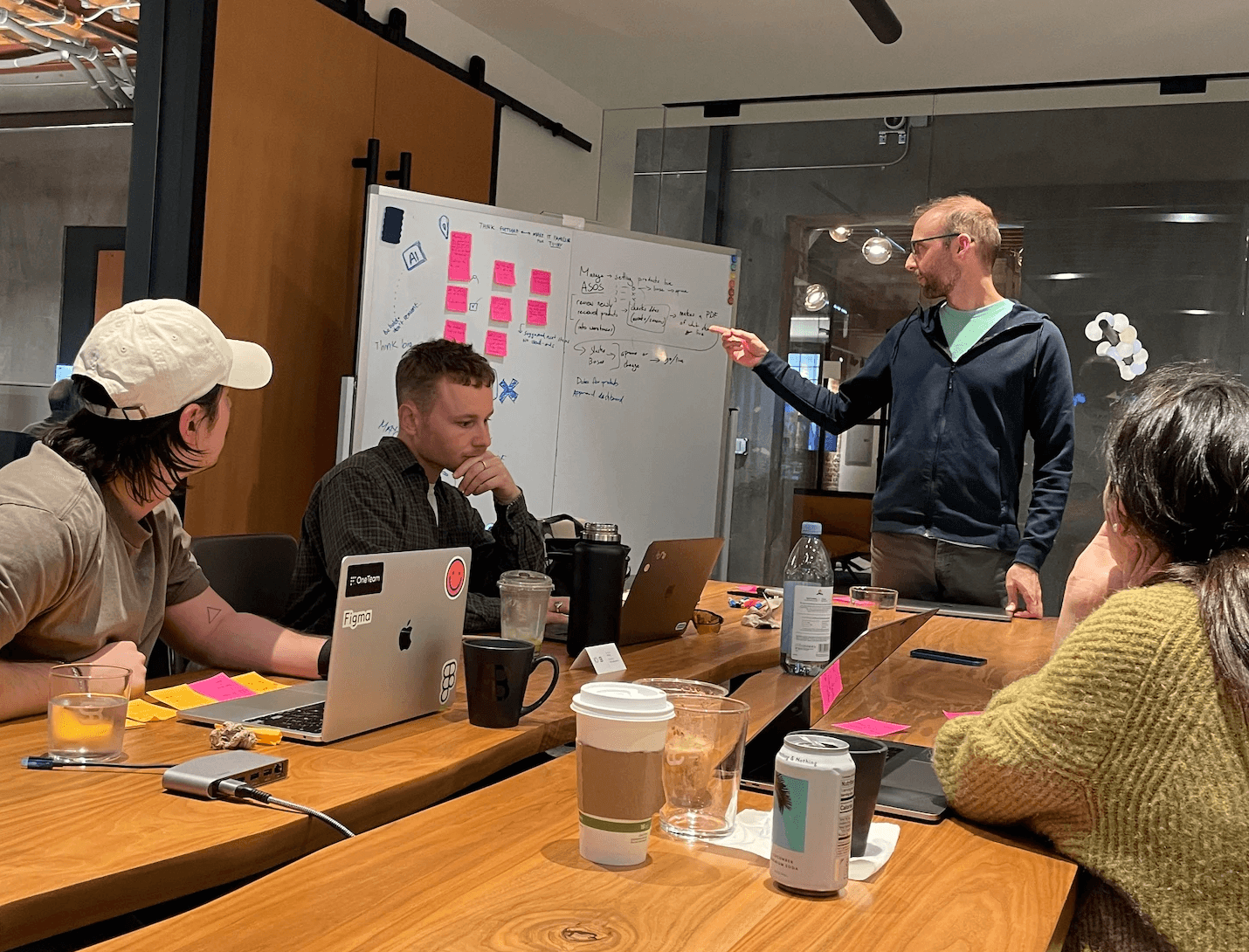
As designers, it’s rare that you truly get to break new ground, so this was a golden opportunity for the team. I carved out time for a quick off-site so that we, as a design team, could think through how AI at Fabric would show up. In addition to some UI/UX strategy, we came up with six guiding principles. I believe they still hold up.
Trustworthy
Transparency is key here—AI should give a rationale for recommendations and provide an easy way to opt in or out.
Relevant
AI should enable me to do my job faster by providing relevant, contextual information at the right time.
Unobtrusive
AI shouldn’t distract, obstruct necessary information, or derail tasks by requiring me to navigate to another screen to complete or verify an AI action.
Bold
AI needs to be exponentially better than the current experience. It can’t just be “better”; it has to be amazing.
Predictable
Use familiar patterns with AI interactions to match mental models and reduce cognitive load. If there is friction in the experience, it will not be adopted.
Consistent
AI interactions should be instantly recognizable as such, and entry points should be consistent across the platform.
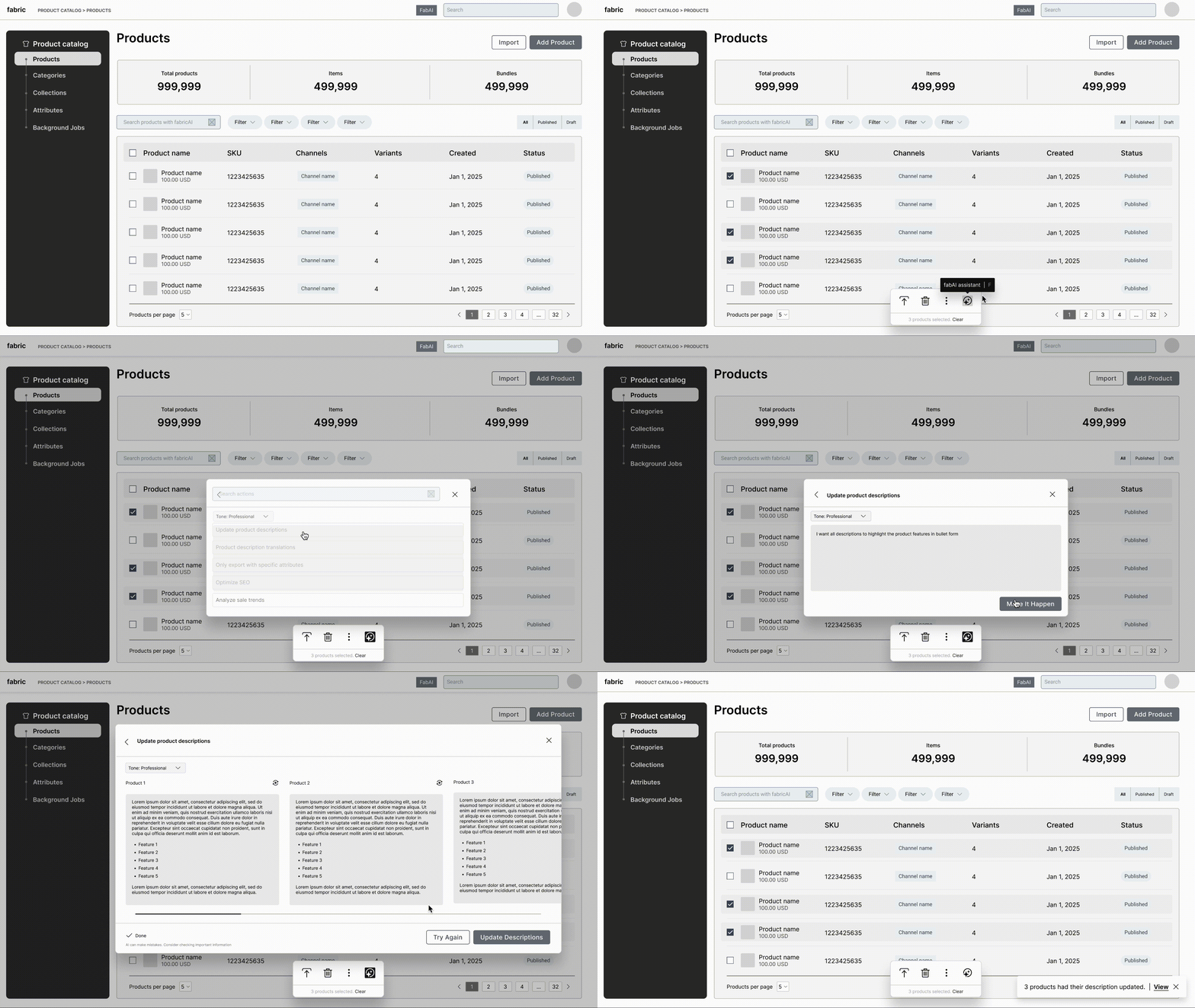
PIM USER FLOW DEMO (WIREFRAME)
Product Description Analyzer Workflow
Merchandising managers used to comb through spreadsheets and check analytics—often requiring additional support—to get even a fuzzy picture of how their product descriptions were performing. With AI, they could score their entire catalog in minutes.
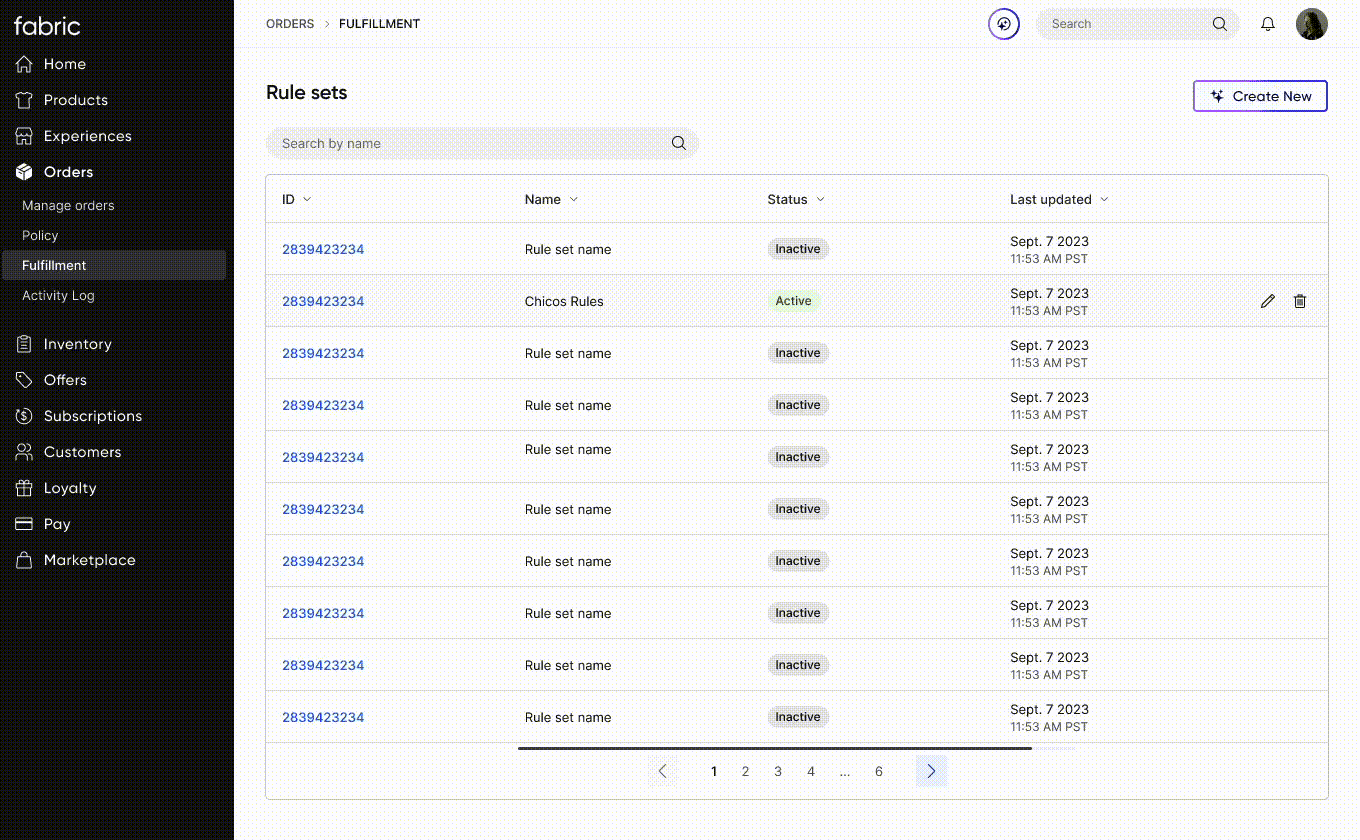
OMS User Flow Demo
Split Shipments Workflow
Shipments fulfilled from two or more locations cost businesses money through added shipping fees and handling time. Supply-chain managers now had critical data instantly at their fingertips and could set up fulfillment rules in minutes instead of weeks.
Outcome
What changed.
49%faster data analysis
90%accuracy rating in beta
40%improvement in self-resolution
The beta results supported the central bet: AI was most useful when it helped people complete specific work with the context and controls needed to trust the result.